 Attorney Doug Goyen is a Dallas dog bite lawyer that handles personal injury cases resulting from dog bites. The Law Office of Doug Goyen has handled thousands of injury cases, including dog bite injuries, and recovered millions of dollars in settlements and judgments since becoming a licensed Texas attorney in 1997. The Law Office of Doug Goyen provides experienced, aggressive, and powerful representation for our clients.
Prior to becoming a Dallas personal injury attorney, Doug Goyen worked as an injury claims adjuster for the insurance industry for several years. Attorney Doug Goyen’s experience, training, and ability give him unique tools and knowledge that ensure you receive the best representation for your dog bite injury case.
Call For A Free Case Review (972) 599 4100
Our firm represents people who have been harmed by another person’s animal. In the eyes of the law, it is not the animal’s fault; rather, the owner or person in charge of the animal is liable for the animal’s actions. Dog owners are accountable for their pets. In cities, they are required to keep them from escaping their yards. People must take extra precautions with their dog if the dog has a history of aggression or biting other animals or people. Dog owners are responsible for their animals’ actions if they put their dogs in situations that are dangerous to others.
If you have been bitten by another person’s dog, you will almost certainly need to hire a dog bite injury lawyer to pursue your claim. Some claims are minor enough that you will not require the services of an attorney. Larger cases, due to the amount of money involved, should never be pursued or negotiated without the assistance of an experienced lawyer to help you navigate the legal system and insurance companies that may be involved in your case.
We provide free initial consultations to assist you in determining whether you require the assistance of an attorney for the damage or injury caused by the animal in question.
Doug is a great attorney. He took care of my auto accident claim promptly, and answered any questions I had. I also had one of my hospital bills go into... read more

 David Jones
Mr. Goyen helped me take on my own insurance company, the great and mighty Allstate. My prior firm basically dumped me, with a permanent injury, because the case didn’t meet... read more
 Pamala McBrayer
Mr Doug Goyen took care of all the dealings with insurance companies, my employer and other parties. He was effective and professional through the whole ordeal. Excellent communication and timely... read more
 Peter B
Very efficient staff. I am VERY pleased with this firm.
 Gina Walker
No Fee Unless We Win! Call (972) 599 4100
DOG BITE INJURY CASES
In some cases, dog attacks can be extremely dangerous. A scared or dominant dog can be ferocious and cause significant harm to a human. It is the responsibility of dog owners to keep their animals under control. If an owner’s dog attacks another person due to the owner’s negligence, the owner is liable for any injuries sustained as a result of the attack.
Every year, millions of people in the United States are bitten by dogs. One in every six people requires medical attention. If you have unpaid bills as a result of an animal attack, you should be aware of your legal rights.
ISSUES WITH INSURANCE IN DOG BITE CASES
One of the most difficult aspects of dog attack cases is determining who is to blame for the attack and then determining which insurance company (if any) is responsible for the liability claim. Often, the dog is free and the owner does not come forward to claim the animal. The owner will sometimes claim that someone must have opened his gate and let his dog(s) out. Sometimes the dog’s owner is renting his home and does not have “liability insurance” that would cover the claim. The owner of the house who rents to the dog’s owner frequently claims that they had no idea the dog was there or that the dog was dangerous. All of this complicates your efforts to pursue your claim against the dog’s owner for the injuries, harms, and losses you sustained as a result of the attack. You will need an experienced dog bite injury lawyer to identify the issues early in your case so that you can recover from your injuries.
Call For A Free Case Review (972) 599 4100
COMPENSATION AVAILABLE IN A DOG BITE CASE
When a person is attacked by a dog, the bites can result in serious injury. These wounds can be severe, causing tissue and muscle damage, torn skin, and nerve damage. Dogs may even bite through bone in the most dangerous situations. Fractured or broken bones, as well as other similar issues, may necessitate a trip to the hospital, as well as days or weeks of recuperation. Animal attacks can cause disfigurement if the trauma is severe enough. Scars and destroyed tissue may mean a life of concealment for the self-conscious individual.
Wrongful death. In some cases, a dog attack or bite can result in wrongful death. When specific injuries, such as those to vital areas, occur, they can be severe or fatal.
Disfigurement. Infections can be serious with dog bites. Dog bites frequently become infected and can result in permanent disfigurement. They can also cause severe emotional trauma, such as a lifelong fear of dogs.
Lost earning capacity. A dog’s owner’s negligence can result in serious injury. The owner could be held liable for damages, including compensation for medical bills, lost income, and other losses. The legal damages available in a dog bite lawsuit are intended to compensate you for your injuries and other losses. The costs of medical bills alone are often enough to take victims by surprise.
Medical bills. Medical bills for treatment, medication, surgery, and therapy are frequently the majority of what is sought after a dog attack and bites. Many of these financial obligations are covered when seeking initial treatment, but some cover the additional care required after the initial damage has been repaired. This could be accomplished through therapy for mental and emotional trauma or through physical rehabilitation. Reconstructive or cosmetic procedures required to repair the wounds caused by the attack may also be covered. Although recovery may be time-consuming and costly, the negligent party should be held accountable for these incidents.
Pain and suffering and Mental anguish. A dog bite lawsuit seeks compensation for all of these setbacks, including those that are difficult to quantify. When dogs attack a person, it causes a great deal of pain. These occurrences may cause emotional or mental distress, which may require years of therapy to resolve. Pain and physical suffering may also persist after medical treatment has ended, necessitating medication. If the victim is a child, the trauma they experience may last the rest of their lives.
In addition to the above damages available for injuries caused by a dog attack injury, you may also be able to receive other compensation depending on your case. Contact our personal injury lawyer in Dallas at (972) 599 4100 to discuss your case and your options. The consultations are free.
Call For A Free Case Review (972) 599 4100
TEXAS DOG BITE INJURY LAW
Texas laws regarding animal attacks, including dog bite cases, fall into the categories of 1) Negligent handling of animals, 2) Strict liability – prior attacks by an animal with a prior history of being dangerous or vicious, 3) Negligence per se – violation of an ordinance or law. Lawsuits, and claims involving animals injuring people, such as dog bite cases, fall into the following categories in Texas.
1) NEGLIGENT HANDLING OF ANIMALS.
To recover on a negligent handling claim, a plaintiff must prove: (1) the defendant owned or possessed an animal; (2) the defendant owed a duty to exercise reasonable care to prevent the animal from injuring others; (3) the defendant breached that duty; and (4) the defendant’s breach proximately caused plaintiffs injury. Allen ex rel. B.A. v. Albin, 97 S.W.3d 655, 660 (Tex.App.-Waco 2002, no pet.); Thompson v. Curtis, 127 S.W.3d 446, 451 (Tex.App.—Dallas 2004, no pet.).
Unlike strict liability claims, to prevail in a negligence action the plaintiff does not have to prove that the animal was vicious or dangerous. Dunnings v. Castro, 881 S.W.2d 559, 562-63 (Tex.App.-Houston [1st Dist] 1994, writ dism’d). The Restatement (Second) of Torts states:
A person injured by a dog bite may sue the owner in strict liability or negligence. An owner of a vicious animal may be strictly liable for damages while an owner of a non-vicious dog may be liable for negligent handling. Bushnell v. Mott, 254 S.W.3d 451, 452 (Tex. 2008). The possessor or harborer of a dog is privileged to allow it to run at large and therefore is not required to exercise care to keep it under constant control, he is liable if he sees his dog or cat about to attack a human being . . . and does not exercise reasonable care to prevent it from doing so.
A dog owner may be liable for injuries caused by the dog even if the animal is not vicious, so long as the plaintiff can prove the owner’s negligent handling or keeping of the animal caused the injury. Dunnings, 881 S.W.2d at 562-63.
The Texas Supreme Court recognized a duty owed by the owner or possessor of a non-vicious animal to exercise reasonable care to prevent the animal from injuring others. Marshall, 511 S.W.2d at 258, citing Restatement (Second) of Torts § 518 (1938); Allen, 97 S.W.3d at 660. Whether a duty exists depends on some degree of proof that the risk of injury from a dog bite is foreseeable, or stated differently, whether the owner had actual or constructive knowledge of the danger presented by the dog. Dunnings, 881 S.W.2d at 563-64. Foreseeability is satisfied by showing a person of ordinary intelligence should have anticipated the danger to others by the actor’s negligent behavior. Searcy v. Broum, 607 S.W.2d 937, 942 (Tex.Civ.App. 1980).
To establish that the defendant owed a duty to exercise reasonable care, the owner or possessor of the animal must be aware of circumstances that could cause an otherwise gentle animal to attack other animals or people. Labaj v. VanHouten, 322 S.W.3d 416, 421 (Tex.App.—Amarillo, 2010, pet. denied). In City of Houston v. Jenkins, 363 S.W.3d 808, 816 (Tex.App.—Houston [14th Dist.] 2012) the training and history of a police dog biting humans proved that the defendant was aware of the dog’s danger.
2) STRICT LIABILITY – DANGEROUS DOMESTICATED ANIMALS.
Injuries caused by dangerous domesticated animals. In circumstances when the dog is known to be violent, dangerous, or destructive, and the bite was caused by the dog’s known nature, Texas courts may use a strict liability rule.
To prove a case against someone for having a dangerous domesticated animal, a plaintiff must show that: 1) the defendant owned or possessed the animal; 2) the animal had dangerous propensities abnormal to its class; 3) the defendant knew or should have known the animal had dangerous propensities, and 4) the animal’s dangerous propensities caused the plaintiff’s injuries. Allen v. Albin, 97 S.W.3d 655, 660 (Tex.App.—Waco 2002, no pet.).
If a dog has previously bitten someone, it may be labeled as a dangerous dog, regardless of whether the bite resulted in serious injury. In this case, strict responsibility means that if a dangerous dog causes an injury, the victim does not have to show that the dog’s owner failed to restrain the dog with reasonable care. The injured person could claim damages simply by proving that the dog was known to be dangerous prior to their harm.
To establish that an animal is dangerous, a plaintiff must demonstrate that the animal’s vicious or aggressive tendencies were not normal for that species of animal. Marshall v. Ranne, 511 S.W.2d 255, 258 (Tex.1974). This is determined by the facts. In one case, testimony that a dog was ferocious, occasionally knocked people down, and disliked children were sufficient to avoid summary judgment. A pit bull should be judged against other dogs, not just other pit bulls. Dunnings v. Castro, 881 S.W.2d 559, 561 (Tex.App.__Houston [1st Dist.] 1994, writ denied).
A dog bite victim must show the following to be eligible for compensation:
→The dog was owned or possessed by the defendant.
→The dog had previously bit or acted as if it wanted to bite someone.
→The dog’s previous behavior was known to the owner.
→The vicious propensities of the dog caused the attack.
Under this doctrine, if any of these elements are not met, the sufferer will not be able to recover. Marshall v. Ranne, 511 SW 2d 255 (Tex: Supreme Court 1974); Lewis v. Great Southwestern Corporation, 473 S.W.2d 228 (Tex.Civ.App.-Fort Worth 1971, writ ref’d n. r. e.).
Call For A Free Case Review (972) 599 4100
3) NEGLIGENCE PER SE – IN DOG BITE CASES, CODES, AND ORDINANCES.
In addition to the owner’s “negligence” in allowing his dog to run loose or allowing the dog to attack you, there are frequently city codes and ordinances that address dog attack cases. There are leash laws, laws requiring dog enclosures, and laws requiring dangerous dogs to be kept in a specific manner – or removed from city limits in some places. People don’t always follow the law, so you’ll need to look into the dog-related codes and ordinances in your municipality to see if one of these codes or ordinances was broken. Proof of an ordinance violation can sometimes overcome a defense used by an insurance company to avoid paying your case.
(Where the dog owner or animal owner has violated a statute such as violation of a leash law, and the animal causes and injury). In Texas, whether or not the violator owns the dog, a breach of an animal control law might result in liability. Laws requiring dogs to be on a leash or forbidding them from running loose or trespassing are common in states, counties, and towns. Courts have mostly held that breaking such regulations can result in liability. The violation is considered negligence per se in Texas. The petitioner must establish that there was a breach of a statute or ordinance. Moughon v. Wolf, 576 S.W.2d 603, 603 (Tex. 1978).
The plaintiff must demonstrate that the violation caused their damage. Searcy v. Brown, 607 SW 2d 937 (Tex: Court of Civil Appeals, 1980).
A plaintiff can file suit if a defendant violates a statute that results in someone’s injury. Most cities have leash laws – an ordinance requiring the restraint of dogs and other animals. If a violation of a city’s leash law was the cause of the injury, the violation is considered “negligence per se”. Trujillo v. Carrasco, 318 S.W.3d 455, 458 (Tex.App.-El Paso 2010, no pet); Gill v. Rosas, 821 S.W.2d 689, 691 (Tex.App.-El Paso 1991, no writ).
Municipal Codes in the Dallas and Fort Worth, Texas Area Regarding Leash Laws
The following are the local city codes and ordinances on leash laws in the Dallas and Fort Worth area. If you are looking for a leash law in another community in the DFW area, or anywhere in Texas, and want to find out what the leash laws are in that community for dogs, you can search the “(Name of the city in question)” and add the term “Municipal Code” – and will usually find it at the top of a Google search. Look for the code sections having to do with “Animals” or “Animal Services”.
Dallas, Texas – Municipal Code – https://codelibrary.amlegal.com/codes/dallas/latest/dallas_tx/0-0-0-2494
Dallas City Code. SEC. 7-3.1. LOOSE ANIMALS.
(a) An owner commits an offense if the owner fails to restrain the animal, at all times:
(1) in a fenced yard;
(2) in an enclosed pen;
(3) in a structure; or
(4) by a tethering device, but only if the animal is in the owner’s immediate possession and accompanied by the animal’s owner, and, if the animal is a dog, the owner complies with the requirements in Section 7-4.7 of this chapter.
Fort Worth, Texas – Municipal Code – https://codelibrary.amlegal.com/codes/ftworth/latest/ftworth_tx/0-0-0-60105#JD_Ch.6Art.II
§ 6-2 PURPOSE AND SCOPE.
(a) It is the purpose of this chapter:
(5) To protect the public health, safety and welfare of the city.
(Ord. 23295-06-2018, § 1, passed 6-26-2018, eff. 7-6-2018)
§ 6-13 RESTRAINT OF ANIMALS.
(a) It shall be unlawful for an owner of an animal to fail or refuse:
(1) To keep an animal under restraint; and
(2) To exercise diligent care and control of his or her animal to prevent such animal from becoming a public nuisance.
…
(b) It shall be unlawful for an owner of an animal to fail to provide for the animal an adequate enclosure, which is one that complies with all of the requirements of this subsection (b) and is completely surrounded by a substantial fence or other structure of sufficient strength, height, construction, materials and design as to prevent the domestic animal from escaping from the area and to isolate the animal from the public and other animals outside the enclosure.
…
(h) A person commits an offense if the person fails to comply with this section.
(1) An offense under this section is a Class C misdemeanor. If a person fails to comply with this section with respect to more than one dog, the person’s conduct with respect to each dog constitutes a separate offense.
(2) An offense under this section is punishable by a fine not to exceed $2,000.
(i) This section does not prohibit a person from walking a dog with a hand-held leash.
(Ord. 23295-06-2018, § 1, passed 6-26-2018, eff. 7-6-2018)
Arlington, Texas – Municipal Code – https://www.arlingtontx.gov/city_hall/departments/city_secretary/city_code_of_ordinances
Defines an animal “at large” as: “At large” shall mean:
1. On Premises of Owner – Any animal not confined to the premises of the owner by some physical means of sufficient height, strength, length and/or manner of construction to preclude the animal from leaving the premises of the owner.
2. Off Premises of Owner – Any animal which is not physically and continually restrained by some person by means of a leash or chain of proper strength and length that precludes the animal from making any unsolicited contact with any person, their clothing, their property and/or their premises.
. . . (Amend Ord 03-100, 9/16/03)
Section 2.07 Nuisances – The following shall constitute public nuisances when caused, allowed, maintained or suffered to exist within the territorial limits of the City of Arlington:
A. Any at large animal;
Section 4.11 Animal At Large
A. A person commits an offense if he fails to keep an animal he owns from being at large.
Plano, Texas – Municipal Code – https://www.plano.gov/255/Codes-Ordinances
Definition of “at large” in Plano: At large means an animal that meets at least one (1) of the following criteria:
(1) An animal that is not confined to the premises of the owner by substantial physical means of restraint of sufficient height, strength, and/or manner of construction to preclude the animal from leaving the premises of the owner or being able to come within six (6) feet of any public area;
(2) An animal that is not under direct physical control of a person by means of a tether of sufficient strength and of a length of not more than six (6) feet. . . .
Sec. 4-51. – Nuisances.
(a) A person commits an offense if the person is an owner of an animal and the person permits, or by insufficient control allows, any of the following to occur:
(2) The animal to be at large as defined by this chapter; . . . and
(5) Allowing any female animal in estrus to be on any public property, or any private property not owned by the animal’s owner, except to transport said animal to a veterinarian for treatment or to a planned breeding in compliance with all other provisions of this chapter.
(b) A person commits an offense if the person causes an animal not owned by him to be at-large by intentionally, knowingly, or recklessly releasing a confined animal. . . .
(f) It is an affirmative defense to prosecution under subsection (a)(2), (4) and (5) of this section if the owner proves by a preponderance of the evidence that the animal was at large due to forces of nature, fire, or the criminal act of a third party who was not residing at the animal owner’s residence.
Denton, Texas – Municipal Code – https://library.municode.com/tx/denton/codes/code_of_ordinances?nodeId=SPACOOR_CH6AN
Defines “at large” as: At large or running at large means an animal not kept within an enclosure or fenced area or restrained by a leash of sufficient strength and length to control the actions of said animal.
Sec. 6-8. – Restraining animals and tethering animals.
(b) It shall be unlawful for any person who is in control, custody, or caring for any animal to permit the animal to run at large in the city or to trespass upon the premises of any other person.
Grand Prairie, Texas – Municipal Code – https://library.municode.com/tx/grand_prairie/codes/code_of_ordinances
Defines “at large” as: At large means:
(1) On premises of owner, any animal not confined to the premises of the owner by some physical means of sufficient height, strength, length, and/or manner of construction to preclude the animal from leaving the premises of the owner;
(2) Off premises of owner, any animal which is not physically and continually restrained by some person by means of a leash or chain of proper strength and length that precludes the animal from making an unsolicited contact with any person, his/her clothing, his/her property, and/or his/her premises; provided, however, that any animal confined within an automobile or other vehicle of its owner shall not be deemed at large;
(3) Any dog which is off leash in a canine off-leash recreation area owned or operated by the City of Grand Prairie and which is not under the physical or voice control of its caretaker and which is capable of causing injury to a person or another animal.
Sec. 5-12. – Running at large and strays prohibited.
(a) It shall be unlawful for the owner of any dog to permit or allow such animal to run at large within the corporate limits of the city.
. . .
(c) A person commits an offense if the person is the owner of an animal and the animal makes an unprovoked attack on another person while such animal is at large, and the attack causes bodily injury or death to the other person.
(d) A person commits an offense if the person is the owner of an animal and the animal makes an unprovoked attack on a domestic animal or domestic fowl while such animal is at large, and the attack causes bodily injury or death to the domestic animal or domestic fowl.
(Ord. No. 9729-2014, § 1, 6-17-14)
Irving, Texas – Municipal Code – https://library.municode.com/tx/irving/codes/code_of_ordinances
Defines “at large” as: At large means:
(1) On premises of owner. Any animal not confined to the premises of the owner by some physical means of sufficient height, strength, length, and/or manner of construction to preclude the animal from leaving the premises of the owner.
(2) Off premises of owner. Any animal which is not physically and continually restrained by some person, by means of a leash or chain of proper strength and length to preclude the animal from making unsolicited contact with any person, their clothing, their property, and/or their premises.
. . .
Sec. 6-2. – Animals running at large.
(a) It is unlawful for the owner or harborer of an animal to fail to prevent it from running at large within the city.
(b) It is unlawful for the owner or harborer of any animal to fail to provide any animal with an enclosure or system of restraint secure enough to prevent the animal from running at large.
(c) Evidence that an animal is at large establishes a presumption that its owner or harborer knowingly failed to prevent any animal from being at large.
(d) Evidence that an animal is at large establishes a presumption that its owner or harborer knowingly failed to provide it with an enclosure or system of restraint secure enough to prevent it from being at large.
(Ord. No. 8597, § 1, 1-26-06)
Lewisville, Texas – Municipal Code – https://www.cityoflewisville.com/about-us/city-services/animal-services/animal-services-ordinances
Defines “at large” as: At large or running at large shall mean an animal that is not physically confined or physically restrained at all times in one of the following methods:
(1) Securely confined upon property lawfully occupied by its owner, within a fence, wall, kennel, corral, pen, or similar enclosure. The enclosure must be constructed, maintained and secured in a manner which prevents the animal from leaving therefrom at any time or reaching beyond the boundaries of the property at any time. For purposes of this chapter, the use of “invisible fences” or other similar containment system or device shall not be considered to be adequate physical confinement or restraint for an animal; or
(2) Securely confined upon property lawfully occupied by its owner within a house, garage, barn or similar structure. The structure must be constructed, maintained and secured in a manner which prevents the animal from leaving therefrom at any time and from reaching outside of the structure at any time; or
(3) Securely restrained upon property lawfully occupied by its owner with a rope, chain, leash, tie-out or other restraint as prescribed by this chapter. The animal shall be securely restrained upon the property in a manner which prevents the animal from leaving therefrom at any time or reaching beyond the boundaries of the property at any time; or
(4) Securely restrained upon any premises in the city with a rope, chain, leash, tie-out or other type of lead as prescribed by this chapter. One end of such lead shall be securely attached to a properly fitted collar, halter, harness, or similar device being worn by the animal, the other end shall be securely held in the grasp of a person who is able to effectively control the animal’s actions; or
(5) Securely restrained by being held in the grasp of a person who is able to effectively control the animal’s actions; or
. . .
Sec. 3-61. – Animals at large.
It shall be a violation of this chapter for any owner, custodian or harborer of the following listed animals to fail or refuse to maintain physical restraint or to physically confine such animal in a manner which prevents it from being at large at any time:
(1) Dogs, except police or public service assisting dogs which are owned or controlled by any law enforcement or public service agency.
. . .
(Ord. No. 4261-04-2016 , § 1(Exh. A), 4-18-16)
Garland, Texas – Municipal Code – https://z2.franklinlegal.net/franklin/Z2Browser2.html?showset=garlandset
Defines “at large” as: (X) Running at large means an animal that is not completely confined by an enclosure of sufficient strength or construction to restrain the animal.
Sec. 22.03 Running at large prohibited; authority to impound
(A) It shall be unlawful for any owner of an animal, other than a cat, to cause, permit, suffer or allow the animal to run at large.
. . .
(1) At the time of the offense, the animal was on a leash held by a person or under the actual, physical control of a person who possesses sufficient strength to control the animal while the animal is not leashed; or
(2) At the time of the offense the animal was engaged in bona fide training exercises under the direct supervision of the person training the animal.
(Ordinance 6125, sec. 1, adopted 5/1/07)
. . .
(J) Maintenance of enclosures. An owner shall maintain all enclosures for the owner’s animals in a state of good repair and in such a manner as to prevent the animal so enclosed from escaping or running at large.
Carrollton, Texas – Municipal Code – https://library.municode.com/tx/carrollton/codes/code_of_ordinances?nodeId=TITIXHESAPRMA_CH91ANRE
Sec. 91.003. – Definitions.
At large. An animal that is not confined to the premises of its owner by a fence of sufficient strength and height to prevent the animal from escaping therefrom, inside a house or other enclosure, or secured on said premises by a leash of sufficient strength to prevent the animal from escaping from said premises, and so arranged that the animal will remain upon said premises when the leash is stretched to full length in any direction; an animal in the open bed of a pickup, flatbed or similar vehicle and not securely confined within a container or other device that prevents the animal from exiting or reaching outside the vehicle. Provided, however, an animal shall not be considered “at large” when held and controlled by a person by means of a leash or chain, of proper strength and length to control the action of the dog, while confined within the enclosed compartment of a vehicle or in any city-designated dog park so long as the animal is in compliance with all other requirements of this chapter.
Public nuisance. (A) Any animal which:
(1) Interferes with a person or passing vehicle.
(2) Attacks another animal causing injury resulting in death or more than $500.00 in veterinary care costs.
(3) Trespasses on school grounds.
(4) Is at large.
(5) Damages private or public property.
(6) Has bitten or scratched a person while at large.
Sec. 91.007. – Keeping of dogs, cats or fowl; limitations.
(B) Fencing requirements. . . .
(2) Escape of an animal or an animal running at large, as covered by this chapter, shall be prima facie evidence that the owner’s fence does not comply with the requirements of this chapter.
(Am. Ord. 3658, passed 1-6-2015)
Sec. 91.010. – Public nuisance.
(A) It shall be unlawful for the owner of any animal to cause, suffer, permit, or allow such animal to be or remain a public nuisance as defined in section 91.003.
(B) It shall be unlawful for the owner or tenant of any property, occupied or unoccupied, to cause, suffer, permit, or allow the property to contribute to a public nuisance as defined in section 91.003.
(Am. Ord. 3658, passed 1-6-2015)
Frisco, Texas – Municipal Code – https://z2.franklinlegal.net/franklin/Z2Browser2.html?showset=friscoset
Sec. 14-3 Definitions
Animal nuisance: Any animal which physically molests passersby or passing vehicles; attacks other animals or persons, trespasses on school grounds; roams at large; damages public or private property; or creates a noise disturbance in an excessive, continuous or untimely fashion.
At large: An animal, including fowl or livestock, not in a secure enclosure or not completely confined by a building, wall, pen or fence of sufficient strength of construction, to physically restrain the animal on the premises behind the front building line of the owner or custodian, or an animal that is not under the physical restraint of the owner or custodian or any other person authorized by the owner to care for the animal by leash, cord, chain, or rope.
Sec. 14-8 Animals at large
(a) Prohibition. It shall be unlawful for any owner, custodian, or harborer to allow any domestic dog or other animal possessed, kept, or harbored, to roam at large as defined in section 14-3 of this chapter. . . .
Sec. 14-9 Animal nuisances
(a) The keeping of any animal that physically molests passersby or passing vehicles, attacks other animals, is not accompanied by a responsible person who maintains physical control over the animal by leash, cord, rope or other physical restraint device, trespasses on school grounds, and/or damages public or private property is prohibited.
Richardson, Texas – Municipal Code – https://library.municode.com/tx/richardson/codes/code_of_ordinances
Sec. 5-1. – Definitions.
Running at large means:
(1) Off premises: a. Any dog which is not restrained by means of a leash or chain of sufficient strength and not more than six feet in length to control the actions of such animal while off premises.b.Any cat which is off the owner’s property.
(2) On premises: Any dog not confined by premises of owner by a substantial fence of sufficient strength and height to prevent the animal from escaping therefrom, or secured on the premises by a metal chain or leash sufficient in strength to prevent the animal from escaping from premises and so arranged that the animal will remain upon the premises when the leash is stretched to full length. A dog intruding upon the property of another person other than the owner shall be termed “at large.” Any animal within an automobile or other vehicle of its owner or owner’s agent shall not be deemed “at large.”
Sec. 5-10. – Duty of owners and persons in control of animals.
It shall be unlawful for any owner or person to:
(1) Fail to prevent any animal from running at large within the corporate limits of the city. . . .
LANDLORD DUTIES IN DOG BITE CASES
Duty in Common areas: A landlord owes a duty to a tenant injured by an animal in common areas if the landlord had control over the area and actual knowledge that the animal was vicious. Batra v. Clark, 110 S.W.3d 126, 128 (Tex.App.—Houston [1st Dist] 2003, no pet.).
Duty in a Leased Premises: Landlords have a duty to non-tenants who are injured by an animal on the tenant’s leased property if the landlord had actual knowledge the animal was on the leased premises, had actual knowledge the animal had vicious tendencies, and had the ability to control the premises. Batra, 110 S.W.3d at 129-130. The ability to control would be relevant in situations where the landlord has the right to remove a dog from the premises under the terms of the lease.
Call For A Free Case Review (972) 599 4100
WHAT SHOULD I DO AFTER A DOG BITE?
If you require medical attention for your injuries, seek it. Obtain all records pertaining to your assault, including animal control records, medical records, police reports, and any other records/reports pertaining to what occurred. Take photos of any injuries. It is easier to describe an injury visually than it is to describe it verbally.
Avoid being a victim for the second time. If your injury occurred in North Texas, do not give the insurance company an “out” by attempting to handle your case on your own without first consulting with an experienced Dallas dog bite lawyer.
No Fee Unless You Win! Call (972) 599 4100
TYPES OF CASES WE HANDLE
The Law Office of Doug Goyen handles personal injury cases throughout the state of Texas. This includes car crash cases (automobiles, 18 wheelers, motorcycles, pedestrians struck by vehicles, etc.), premises cases (such as injuries caused by a dangerous condition on a property), dog bite cases (or other animals where the owner let their animal loose or had a dangerous animal and the owner’s negligence causes injury to someone else), workplace injuries, and other injuries caused by the negligence or harmful acts of others.

Car Accidents
We deal with the insurance company and protect your rights while you focus on what you need to do to get better and take care of yourself and those around you.

Truck Accidents
Large commercial trucks do serious damage and cause serious injuries. We will fight for you to get you the compensation you deserve and protect your rights while you recover.
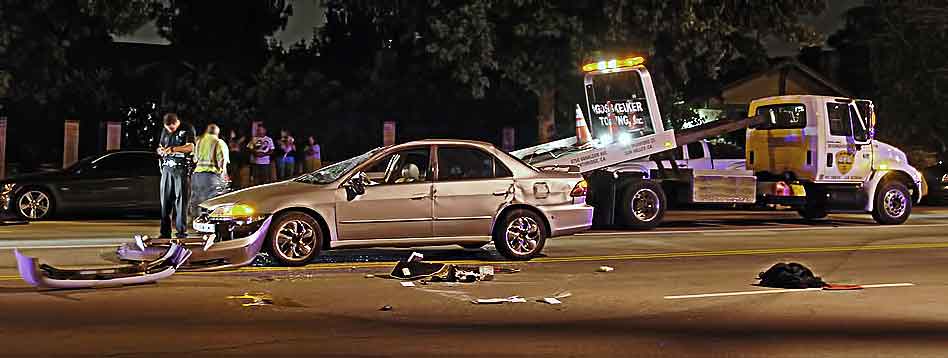
DWI Accidents
Drunk drivers cause serious injuries and death every year. We fight their insurance companies to get you compensated for the damage and injury they have caused you.

Pedestrian Accidents
Pedestrians struck by vehicles can suffer serious injuries. We represent people injured by negligent drivers and help our clients get compensation for their injury.

Bicycle Accidents
Bicyclists are at risk of serious injury when struck by vehicles. We represent bicyclists who have been struck by negligent drivers.

Dram Shop Cases
When bars or restaurants continue to over-serve drunk people and those people cause accidents with injuries, we help clients recover compensation for their injuries.

Motorcycle Accidents
We protect the rights of motorcyclists who have been injured by negligent drivers. We fight to get all the compensation due from the insurance company.

Premises Liability
We help clients recover compensation for injuries caused by unsafe conditions on the property. Businesses have a duty to their customers to keep their establishments safe.

Dog Bites
Dog owners who are irresponsible with their animals owe for any damage their negligence caused. We deal with the insurance company involved to get compensation for injuries caused by negligent dog owners.

Wrongful Death
When someone dies due to negligence the family and estate have a claim against the negligent parties that caused the death. We represent families and estates in recovering compensation for the harm done.

Personal Injury Cases
Personal injuries are caused by negligence, assaults, and other acts where those who caused the injury owe for the injury caused. We help people with personal injury cases recover what they are owed for the damage caused.
Call For A Free Case Review (972) 599 4100
CASE REVIEWS ARE FREE
If you need a Dallas dog bite lawyer, contact us for a free phone consultation and strategy session about your case. The strategy session will include a summary of the facts discussed during the session, the identification of legal issues, and the identification of the most important legal issues that will maximize the value of your case. Contact a personal injury lawyer in Dallas today at (972) 599 4100.
DIRECTIONS TO OUR OFFICE
Law Office of Doug Goyen
15851 Dallas Pkwy #605
Addison, Texas 75001
(972) 599 4100 phone
(972) 398 2629 fax
Directions to our office: We are on the southbound side of the service road to the Tollway. Stay on the Dallas North Tollway until you come to the Keller Springs exit. Take the Keller Spring exit. Stay on the service road on the southbound side and go just past Keller Springs. Our office is the 2nd building south of Keller Springs, located on the service road to the North Dallas Tollway in the Madison Business Center on the 6th floor.
By Doug Goyen, douggoyen@goyenlaw.com
Please Review us at:
By Doug Goyen, douggoyen@goyenlaw.com
Related Dallas Motor Vehicle Accident Pages:
Related Personal Injury Pages: